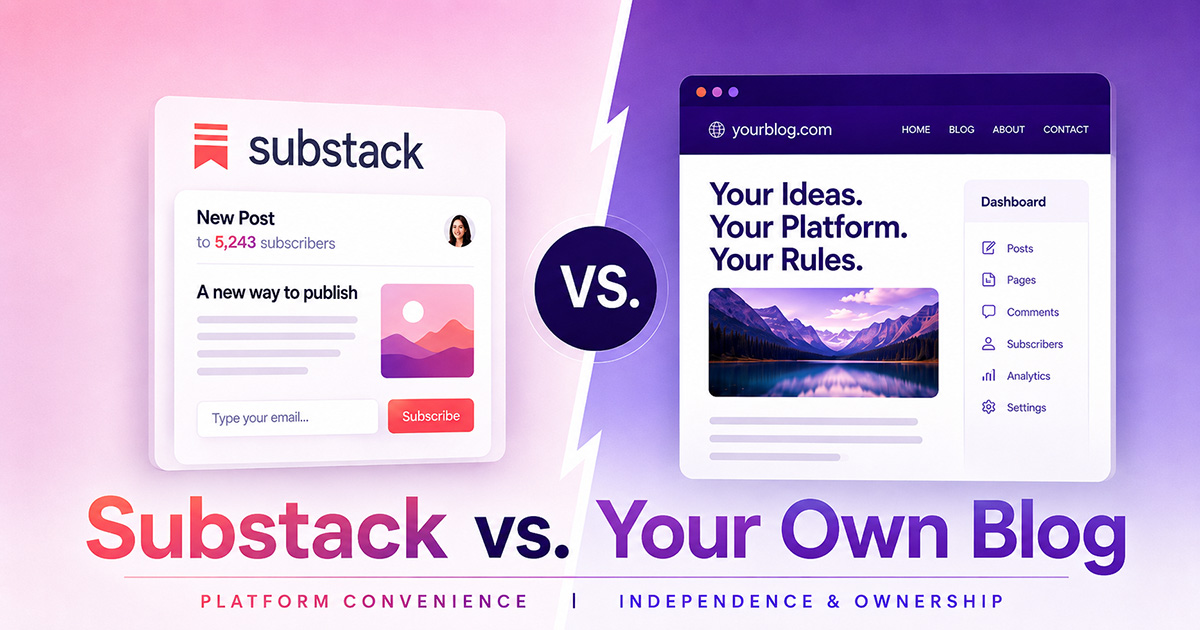
Over the past year, I’ve noticed that more and more independent providers are creating Substack newsletters. In many ways, it’s become the latest marketing trend, but before you jump on board, it’s worth asking an important question:
Is Substack actually the best platform for your business?
The answer isn’t the same for everyone.
For some providers, Substack can be an excellent addition to their marketing strategy. For others, investing that same time into a blog on their own website will likely produce better long-term results.
Let’s look at both options.
What Substack Was Originally Designed For
When Substack launched, it was designed as a publishing platform for writers. It wasn’t designed to replace your social media or even your newsletter. It was designed as a platform for longform writing delivered in a newsletter format.
The concept was simple:
- Write thoughtful, long-form articles
- Email them directly to subscribers
- Build a loyal readership over time
Writers, journalists, authors, economists, and industry experts quickly embraced it because it allowed them to publish without needing a traditional magazine or newspaper.
Over time, however, Substack evolved.
Today it includes recommendations, Notes (its own social feed), an app, discovery features, and a community of readers. It’s become much more than a publising platform and moved closer to a social media platform.
Why So Many Providers Are Joining Substack
Like many online trends, popularity often creates more popularity.
A handful of providers who genuinely enjoy writing began publishing thoughtful content and attracted loyal readers. Others noticed their success and created their own Substack accounts.
Before long, having a Substack became almost expected.
There’s nothing inherently wrong with that, but it’s worth asking whether people are copying the platform or copying the strategy.
Those are two very different things.
Understanding the Cargo Cult Effect
There’s an interesting concept called cargo cult thinking.
It describes situations where people copy the visible habits of successful people without understanding what actually made them successful.
Imagine someone notices that a highly successful escort has:
- A beautiful website
- A Substack
- A luxury logo
- Professional photography
It’s easy to assume that creating a Substack is one of the reasons she’s successful, but what if her success actually comes from something much harder to copy?
Perhaps she’s naturally charismatic. Perhaps she’s an exceptional writer. Perhaps she’s been building relationships with clients for ten years. Perhaps she simply has an incredibly unique personality.
The Substack is visible part of her success but the real reason isn’t.
This happens constantly online.
Someone becomes successful doing something, others imitate the outward behaviour, and eventually everyone is doing it without asking whether it still makes sense.
That doesn’t mean Substack isn’t valuable—it simply means it shouldn’t be adopted automatically. Nothing you see online should be adopted automatically without looking into the details first.
The Biggest Advantage of Writing on Your Own Website
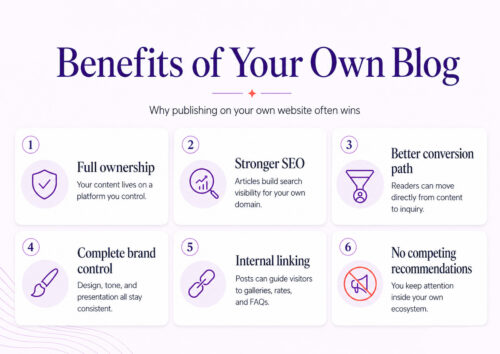
Since your goal is attracting new clients, your own website has one enormous advantage:
You control the entire experience.
A visitor who arrives on your website isn’t surrounded by recommendations, competing creators, or endless feeds.
Instead they can:
- Read your bio
- Browse your gallery
- View your services
- Learn your personality
- Join your mailing list
- Submit an inquiry
Everything works together.
Your blog articles become another part of your personal brand rather than existing as isolated pieces of content on someone eles’s platform.
Every blog post also strengthens your website over time. It builds your SEO, creates internal links between your pages, and gives Google more reasons to show your website in search results.
That’s an investment that compounds for years.
The Marketing Funnel Difference
This is perhaps the biggest strategic difference between the two platforms.
When someone reads an article on your website, you’ve brought them into your world. They might continue reading another article, browse your gallery, read your FAQ, or even better decide to contact you.
Every page gently guides them deeper into your brand.
Substack works differently.
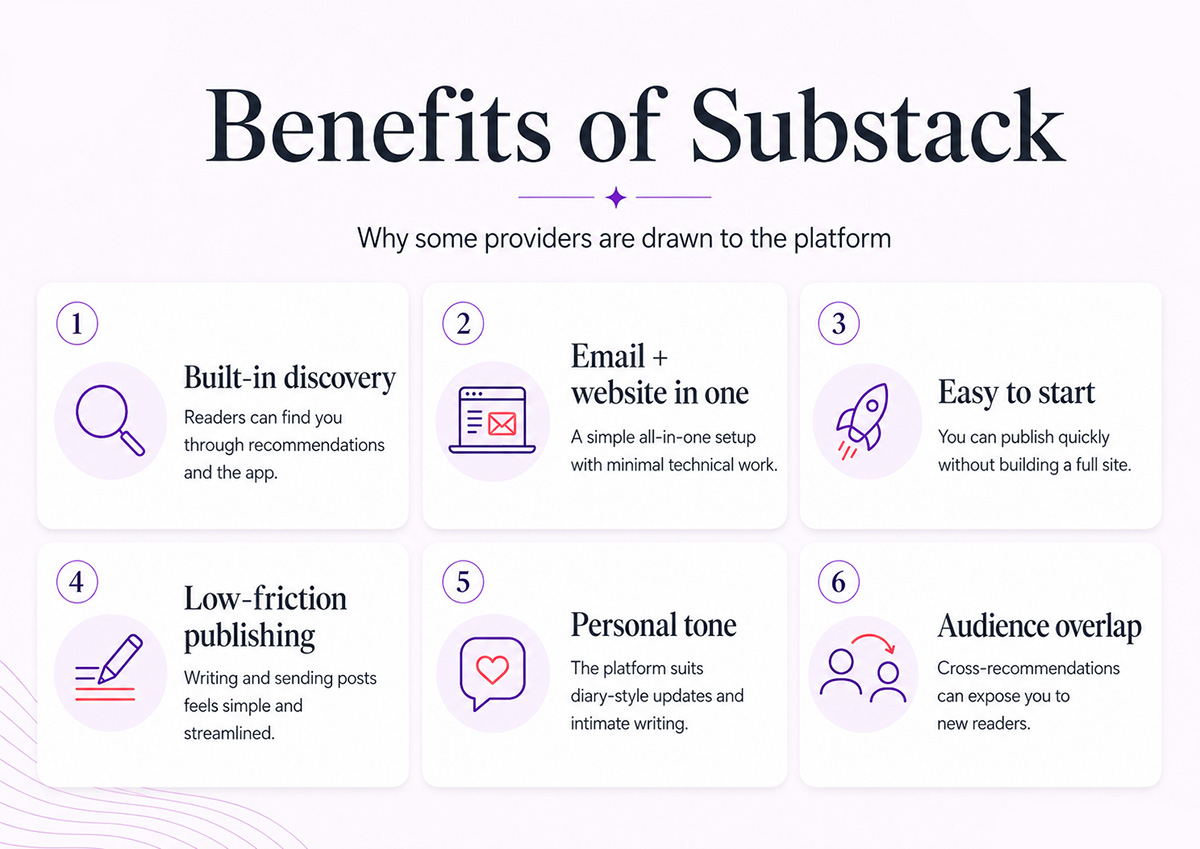
Its goal is to help readers discover more content on Substack.
After finishing your article, readers may see recommendations for other publications, browse Notes, or subscribe to another writer.
That’s not necessarily a bad thing—it’s simply how the platform is designed. They want to keep users on their platform as long as they can.
If your primary goal is converting readers into clients, your own website provides a much clearer path.
Where Substack Really Shines
None of this means you should avoid Substack.
In fact, it’s an excellent platform for the right kind of content.
Substack works best when you’re writing because you genuinely enjoy long form writing.
Readers subscribe because they’re interested in your thoughts, experiences, and perspective, not just because you’re advertising your services.
Some ideas that work particularly well include:
- Stories from your travels
- Reviews of restaurants, hotels, or museums
- Books you’re reading
- Personal reflections
- Funny experiences
- Behind-the-scenes glimpses into your life
- Essays about creativity, fashion, architecture, food, or culture
Notice what these topics have in common.
They reveal who you are.
They aren’t sales pitches.
Ironically, this kind of content often does more to attract ideal clients than direct promotion ever could.
What Doesn’t Work as Well
One mistake I see is treating Substack like another social media account.
Posts such as:
- “Just landed in Miami!”
- “Available this weekend!”
- “Here’s a selfie from my hotel.”
may work well on Instagram or Twitter but they’re much less compelling on a platform where readers expect thoughtful writing.
If every post feels like an availability update, subscribers have little reason to stay engaged.
Substack rewards substance.
So Which One Should You Choose?
If you want to build a readership around your writing, Substack can be a good addition to your marketing strategy.
If your primary goal is attracting new clients, improving your search rankings, and guiding readers toward making an inquiry, a blog on your own website will provide a stronger long-term return.
Personally, I believe the strongest strategy for most independent providers is to treat their website as the centre of their online presence.
Publish your best articles there.
Own the experience.
Build your SEO.
Strengthen your brand.
If you also enjoy Substack, use it because you genuinely like writing and connecting with readers, not simply because everyone else seems to have a Substack.
The best marketing decisions aren’t made by following trends.
They’re made by understanding your goals and choosing the tools that help you achieve them.